Case Study
Local Community workshops in Fife to support communities to take action on climate change
Fife Community Workshops

- Location: Seven areas across Fife
- Size: 117 participants
- Challenge: Whilst Fife Council has a strong climate strategy in place, the challenge was enabling communities to meaningfully engage and take local climate action. The council aimed to understand what support residents needed, what local climate actions they prioritise, and how to tackle systemic barriers to change and action.
- Recruitment : Workshops were promoted via social media, Climate Action Fife, Fife Climate Hub, and other community groups. The Coalfield Regeneration Trust supported both the development and delivery of the workshops.
- Days of dialogue: 3-4 hour workshops in each of the seven areas
Executive Summary
Objectives
- Facilitate changes to council policy and practice that enable more grassroots action
- Support communities to identify barriers to taking climate action
- Co-create locally relevant climate solutions with community members
- Inform future community-led plans and regeneration projects
Approach and Methodology
Workshops were held in accessible venues during the date, with free food and translation services offered. All participants were asked about access needs when they registered, and sessions were designed to engage with a range of learning styles. There was no gift of thanks offered to participants.
Innovations
Key Outcomes
- Diverse range of participants in terms of age, sexuality, caring responsibilities, and disability
- Ethnic diversity of participants was limited
- Most workshops were attended by 15-20 people
- One workshop was attended by only one person
- 60% of participants already worked with local communities, and 40% of participants were community members
Climate Impact
- Community priorities identified by the groups – such as community fridges and gardens – will be presented to each area’s People and Place meetings. These cross-sector groups, which include representatives from the council, tourism, health, and local business.
- Fife Council is incorporating ideas into their local climate strategies to tackle barriers to local climate action. One example of this is overcoming the barriers communities face when trying to start community growing projects on education-owned land.
Social Impact
- Workshops highlighted the strong overlap between climate action and local priorities such as health, poverty and regeneration
- As a result of exploring co-benefits of climate action, a number of community groups, NHS staff and council officers who participated in the workshops are integrating climate actions into future community engagements
Internal Impact
- A senior figure from Fife Health and Social Care PArtnership (HSCP) was inspired by the link between health and climate discussed at the workshops. This has led to plans for a carbon literacy and climate co-benefits session for the full HSCP leadership team, to inform HSCP Health and Social Care Climate Action Plan.
- Inside the council, the workshops are considered a model of good practice in inclusive community engagement
What happens next?
- November follow up event to provide feedback to Fife communities on actions already taken, the next steps of the Big Community Move, and wider work around Climate Fife Strategy
- The council is arranging meetings with the seven area-based People and Places groups to explore community ideas and inform future area planning
- The council is incorporating ideas into climate action strategies
Challenges & Lessons Learned
- Turnout at one workshop was low (one of 20 registered participants attended)
- Most attendees were community workers rather than residents
- Young people were underrepresented
- Timing and framing using climate language may have limited appeal to broader audiences
Lessons Learned
- Start with co-benefits not climate. Using relatable language that focuses on the co-benefits, such as health, poverty or flooding, will interest a wider group.
- Build networks to target specific underrepresented audiences, such as young people, and develop workshops tailored to their interests and needs.
- Offer multiple session times. Base these are different community needs outlined by community partners
- Offering food helps draw people in. Food goes a long way to encouraging participation, even if you are unable to resource a full gift of thanks
Communities need visible feedback loops. Plans to host a follow up November workshop has been positively received. The workshop will show what happens with participant ideas, which is essential for building trust and future engagement (read more about how to close the loop here)
Communicating for impact
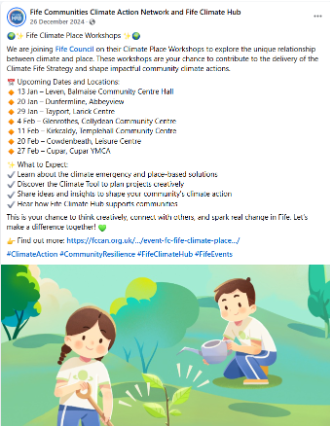
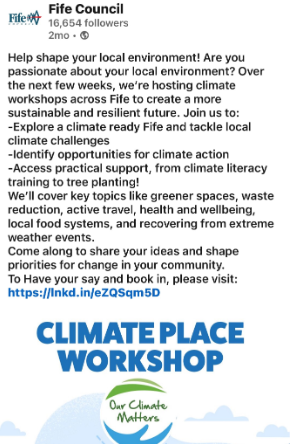
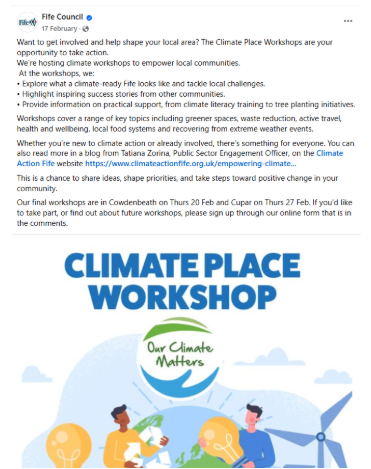
Communications included partnership outreach with Climate Action Fife, social media and other local networks. For future workshops, communications will take a more personal approach focusing on ‘what is important to you and your place’ rather than starting with climate change. A community feedback event is scheduled for November 2025 to report back, highlight impact and outline next steps – this is a vital step to building trust and continuing the conversation.
You can see examples of the workshop communications below.
Key takeaways and recommendations
- Invest in accessibility. Investing resources in inclusive practices such as paying travel expenses, covering childcare or offering creche services, and offering multiple session times. (see more about accessible engagement here)
- Frame climate action around what matters to people. Link climate to daily life concerns like the cost of living, wellbeing, and local regeneration. Focusing on co-benefits of climate action is a good way to get broader community buy-in.
- Use varied formats during workshops. Include maps, images, discussions, and hand-on tools to support participant during workshops. This will make your engagement more interesting and accessible to a wider range of learning styles.
- Close the loop. Make sure to follow up with residents to show how their input is influencing your work. (see more about closing the loop here)
- Offer ways to stay engaged. Think about how you can keep community members involved through follow up events or other initiatives. This can help build community capacity for climate action and build relationships between the council and residents.

Additional Resources & References
Earth Charter in Action – Powering a global movement
Overcoming the World’s Challenges – The Global Goals
Place Standard tool | Our Place
Climate Action Fife | Empowering climate action in Fife
Contact Information
Tatiana Zorina, Environmental Strategy Officer
Climate Change and Zero Waste team
Fife Council
[email protected]
