STAGE 4: PLANNING
How to form an advisory group
This guide covers the importance of an independent advisory group in in your engagement process, the roles of the group, thinking about membership of the group, and how to set it up.

Why?
Advisory groups in practice
Who should be involved in the Advisory Group?
- Impartial Advisory Groups consist of experts and specialists with no direct stake in the outcome, providing a strategic perspective on the issue. These may include academics, subject specialists, and issue-focused civil society groups.
- Balanced Advisory Groups bring together a diverse range of stakeholders to reflect different perspectives. For example, the Advisory Group for the Southampton Citizens’ Climate Assembly on Transport included both active travel advocates and organisations representing concerns about car use restrictions, such as disability groups.
- Cross-Party Advisory Groups focus on political balance rather than a full spectrum of perspectives. These groups typically include politicians representing different parties, often in proportion to the local balance of power.
For example:
Who is directly responsible for the decisions the engagement will feed into?
Who is influential in the area, community and/or organisation?
Who will be affected by any decisions on the issue (individuals and organisations)?
Who runs organisations with relevant interests?
Who is influential on this issue?
Who can obstruct a decision if not involved?
Who has been involved in this issue in the past?
Who has not been involved, but should have been?
In practice, advisory groups often combine elements of these formats.
There is nothing stopping you from creating more than one group – for example, if your subject is technical but the issue is local you may create an impartial group of subject specific experts to guide the content and a separate group of local stakeholders to inform the shape of the outputs.
The important part is that the advisory group supports the engagement in a fair, unbiased way.
Lastly, we suggest that 14 people are the maximum amount to have within an advisory group.
Table of Contents
Exercise: Mapping Your Advisory Group
- Map groups that represent who is most affected by the issue your project is engaging on
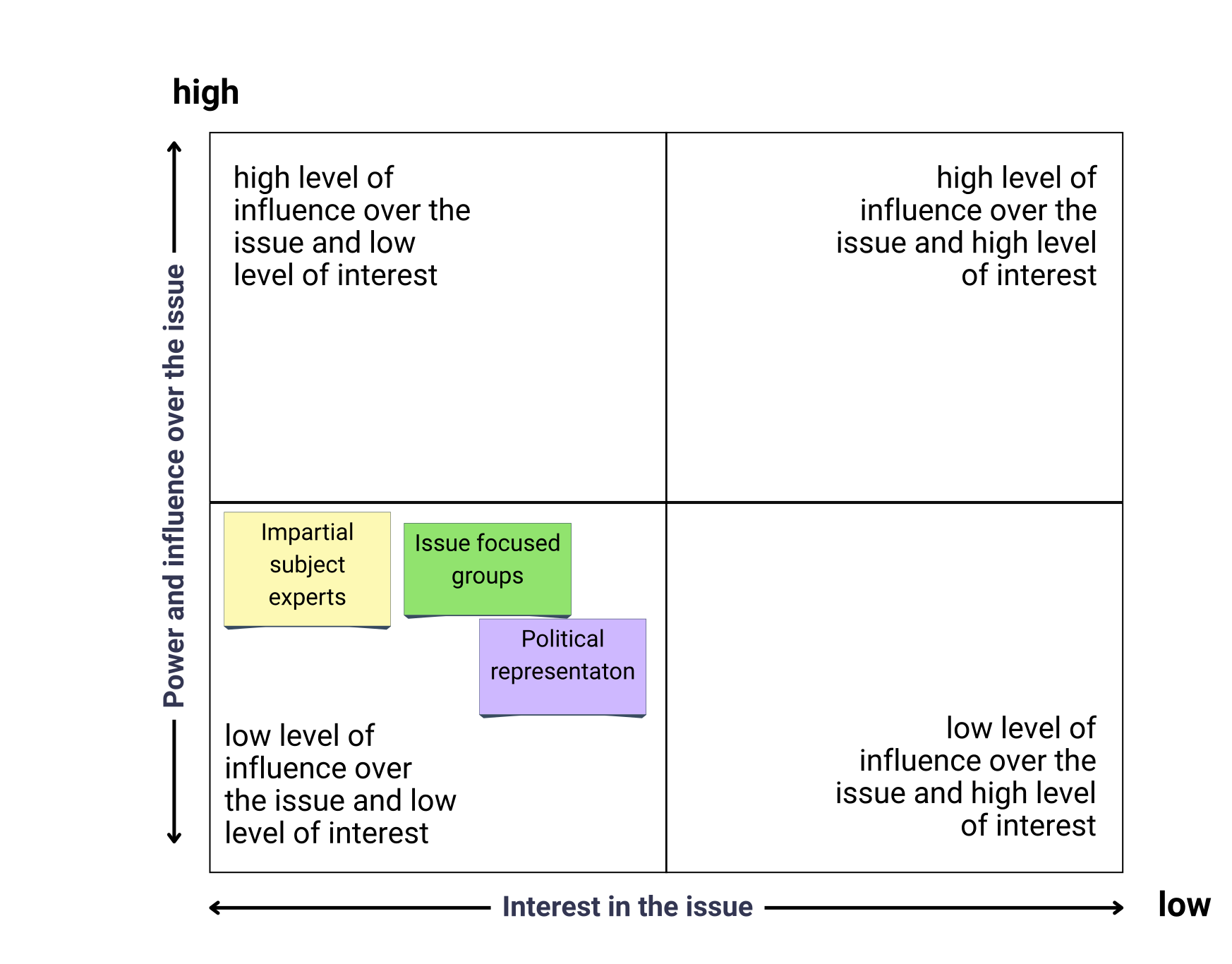
- Map your key actors, decision makers, and interested parties against:
- Impartial subject experts
- Issue focused groups
- Political representation
- Give each a rating for their power over and interest in the issue. This is important to check your group includes both those with the power to influence and those who may have less power but will be particularly impacted by the outcomes
- Consider what a balanced group will look like for your project.
- See below an example matrix showing power and interest along with some key actor groups as sticky notes. Replicate this on a large sheet of paper.

How regularly should an Advisory Group meet?
- Before the process begins: To contribute to overall design, recruitment, and stakeholder mapping.
- During the process: To provide guidance on speakers, content, and review outputs (this is the most critical meeting and should be retained if others are not feasible).
- After the process: To reflect on outcomes, support dissemination, and help ensure recommendations reach decision makers.
What do Advisory Group sessions look like?
Advisory Group meetings should last between one and two hours, allowing sufficient time to digest information, ask questions, and engage in meaningful discussion.
Building strong relationships is key to the effectiveness of the group. Allocate time at the beginning of each session for introductions and reconnection—both with each other and with the discussion topics. Investing in relationships enhances engagement and commitment, leading to deeper discussions and greater impact.
Meetings are usually chaired by either the commissioning organisation or the delivery partner. Advisory Group agendas and any pre-reading should be sent out at least one week in advance to allow members sufficient time to prepare.
Creating and delivering your advisory group –
an action planning checklist
The table below takes you through the key questions you need to ask when setting up your advisory group.
📩 Download a printable version here and complete this with your team.
Action planning check list

Exercise: Timeline planning
Look at your project timeline. Considering the roles that you would like your advisory group to fulfil, plot key moments for the advisory group on your timeline. These should be at minimum:
- identification of members
- invitations sent
- Meetings
We know people have busy calendars, so we recommend leaving at least three weeks between sending invitations and your first meeting. This will help maximise attendance.
