STAGE 8: LEARNING AND EVALUATION
How to evaluate public engagement
This guide covers how to evaluate your public engagement projects.
Why?
There are two main types:
- Process evaluation – Did we deliver the engagement as planned? Was it inclusive and well managed?
- Impact evaluation – What difference did the engagement make? Did it influence decisions, build trust, or change understanding?
Table of Contents
When to plan evaluation
Don’t wait until the end—start thinking about evaluation from the beginning, especially if you are considering commissioning an external evaluator. Build it into your planning and allocate time, budget, and capacity from the outset.
Evaluation should run alongside your engagement, with opportunities for reflection and course correction throughout. A final evaluation report should be produced after the engagement has ended, during the “learning and evaluation” phase of your project.

Why evaluation matters
Evaluation is a crucial part of doing high-quality public engagement—especially when the stakes are high, as they are with climate. It helps you understand what worked, what didn’t, and what difference the engagement made.
Evaluation supports:
- Accountability – to participants, partners, funders, and the public.
- Learning – helping you and your organisation improve future engagement.
- Impact – showing how public input influenced climate decisions.
- Value – providing evidence of what approaches are effective and worth investing in.
A strong evaluation tells the story of your engagement: whether it achieved its aims, how it was experienced, and what it changed.
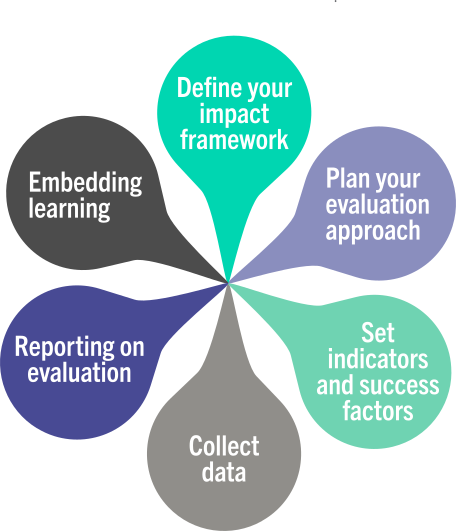
The evaluation process cycle
Below is a typical evaluation cycle for public engagement.