STAGE 3: COMMISSIONING YOUR ENGAGEMENT
How to commission good public engagement for decision making
This guide covers how to commission high quality public engagement to influence decision making.

What is commissioning, and when does it happen?
Sometimes, councils or public bodies bring in outside organisations to help run public engagement work. This is called commissioning. It might happen at the start of a project—where an external organisation is asked to deliver part or all of the engagement work—or later on, when new needs or gaps in skills are identified during a longer programme.
In either case, it’s important to be clear about what the external organisation is being asked to do and how their work fits into your overall engagement and decision-making plan.
What does commissioning involve?
Commissioning is the process of planning and buying in services—in this case, public engagement services. For councils, this usually involves a legal process called procurement, where different providers are invited to submit a tender (a bid to do the work). This process can have several stages and must follow rules to make sure it’s fair and transparent.
Put simply, commissioning is the overall process of identifying what you need, finding the right organisation to deliver it, and putting legal agreements in place to get the work done.
To commission an external organisation to support your engagement services, you need to create a Commissioning Brief that you will share with prospective partners. This should be based on your Engagement Brief.
How to commission high quality public engagement
Why commission external engagement services?
You might bring in an external organisation to help with engagement if your team doesn’t have the right skills or enough time to do it in-house.
External providers can offer specialist knowledge. They might already have strong relationships with the communities you want to reach. They may also be better placed to run large or complex activities—like citizens’ assemblies. They can offer external credibility to the engagement and your subsequent decision making process.
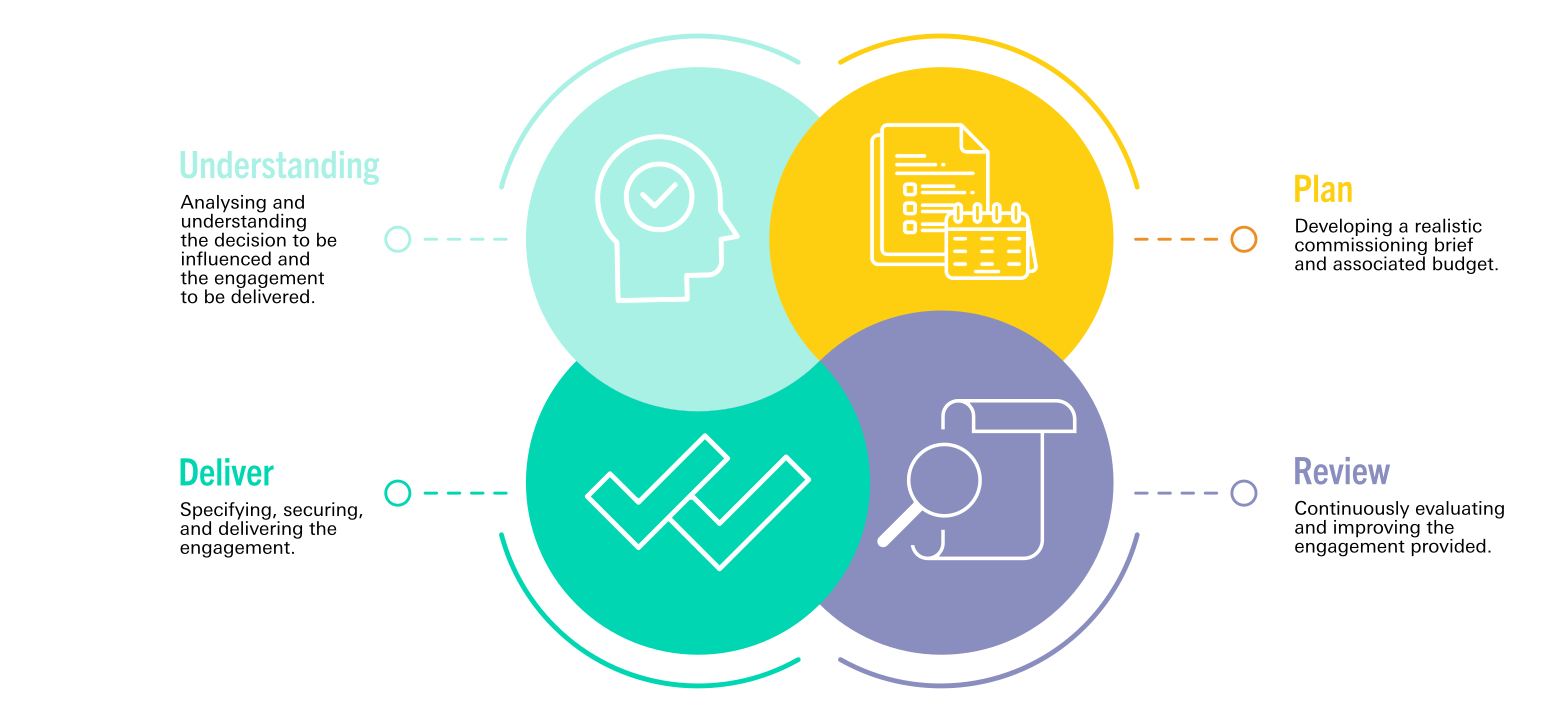
Before commissioning the work it is helpful to consider the whole of the commissioning cycle.
Understand
Start by getting a clear picture of the issue or decision your engagement will inform. WHO do you want to engage; On WHAT decision; and WHY do you want to engage these people? Refer back to your engagement brief to help you.
Then, look at the stages of the engagement process (our wheel with the stages on our main page).
Are you planning to commission the entire engagement journey—from design to delivery to evaluation—or just certain parts? For example, you might only need help with recruitment and facilitation of your engagement process.
Plan
Once you’ve gone through your understanding phase, you can start developing your Commissioning Brief.
📩 Click here to download a template for your own commissioning brief.
Project backgrond
❓Who do you want to engage?
On what – i.e. what decision do you want them to feed in to?
Why do you want to engage them now?
What is the internal and external context to this engagement project?
Project aims
❓What is the purpose of the engagement project?
What is the scope? What decision(s) do you want this process to feed into? Where are the ‘red lines’?
What does success look like?
Key information
❓What is your total budget? What are the anticipated direct costs (e.g. participant gift of thanks, venues, catering) and indirect costs (staff time). How will this be split between you and the commissioning organisation? For guidance on costs, see Involve’s page.
What are your timescales? When do you need the results of the engagement process for them to have a genuine impact on decision making?
Where will the engagement take place? Will it be online or in-person?
Who will the provider report to?
Deliverables
❓What type(s) of outputs do you require from the engagement process? Remember to think about the whole engagement process, including comms and evaluation.
Your commitment
❓How will the engagement feed into decision making?
Who will receive and respond to the outputs from the engagement process?
What we’re looking for
❓What are the specific qualities, skills or experience you are seeking in a provider?
Pause and Think exercise
Making the commissioning process clear and transparent will set you up well for a successful engagement process. Reflect on the following questions when developing your commissioning brief:
- Have you engaged potential providers early in the process so they can understand the challenges you face and how they might help you to overcome them?
- Is the commissioning timeline proportionate to the work on offer?
- Is the specification clear and concise? Is it easily accessible to prospective providers?
- Have you been clear and specific about what the work includes, what the budget covers and what it doesn’t?
- Do the requirements specified in your brief match the desired outcomes?

Deliver the engagement
Work closely with your provider(s) to manage, review and make changes to your engagement plan as appropriate. For more information, please see the planning, recruiting and supporting participants, and delivering your engagement pages.
Review and evaluate
Be clear about the information you will require for evaluation. This will have been built into your specification from the beginning but should also be reviewed with your commissioned partner as the engagement is underway. Review and generating information for evaluation run throughout the engagement process.
Review and learn from the commissioning process itself. Is there anything to take away to build into future commissioning design? Build your project so that your learning helps to improve the process and outcomes of commissioning high quality public engagement in future.