Methods
Tools that fit your purpose.
Not every process needs a citizens’ assembly. This section explores different engagement methods—what they are, when to use them, and how to make them work for your context. It’s about choosing the right tool, not the trendiest one.


Before jumping into a method…
Stop and think.
The most effective engagement starts with a clear plan – not a pre-picked tool.
Go back to ‘creating your engagement brief’.
WHY YOUR METHOD MATTERS
The method you choose can make or break the success of your climate engagement. It is not just about collecting opinions, it’s about ensuring that the right people are heard, that their contributions inform decisions, and that the process builds trust and legitimacy.
Whether you’re planning a city-wide conversation on transport or gathering views from local residents affected by flooding, the right method helps you:
Connect engagement to real-world change
Reach the right audiences
Ask the right questions
Get the type of input you need
Build your engagement brief
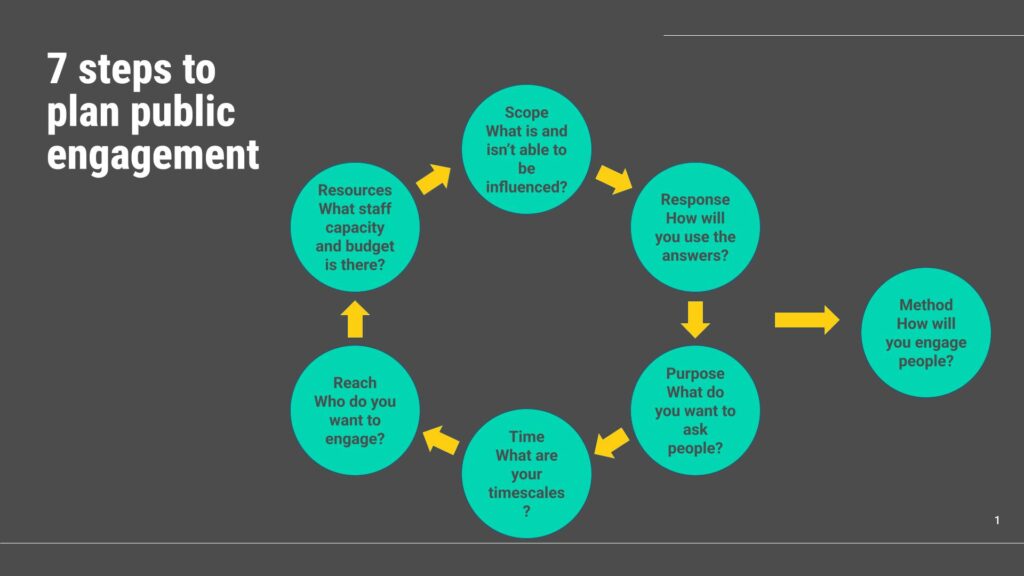
Before selecting a method, it is essential that you develop your engagement brief. An engagement brief is a simple document that supports you to think through the essential questions to help you design and deliver high-quality and impactful public engagement on climate. Before you select your method, make sure you’ve defined your:
- Scope – what’s up for discussion?
- Purpose – why are you engaging?
- Reach – who do you need to hear from?
- Impact – what decision will be impacted by the engagement?
- Timescapes – when do you need results to inform your decision?
- Resources – what’s your budget and staff capacity to deliver this engagement?
Click here to visit our page on creating your engagement brief.
Choosing your method:
Six points of difference
Once you’ve completed your engagement brief, you are ready to start thinking about the most appropriate method(s) for your local climate engagement. It is useful to think about these six points of difference:
Individual or Group Method
What does this mean?
- Individual = people participate separately for instance through surveys or 1:1 interviews
- Group = people talk together for instance in a workshop
Examples
Individual = Scottish Government Data Intelligence Network Engagement Plan
How to choose?
- Individual engagement is useful when you want individuals’ undiluted opinions or when the topic is highly personal
- Group engagement is useful when you want people to develop mutual understanding, learn from each other and create a shared way forward
Pros and Cons
Group. Pros = builds common ground, generates rich ideas, and supports group learning. Cons = needs strong facilitation, can be less accessible to some people
Individual. Pros = good for personal storytelling and can be less intimidating for participants. Cons = no opportunity to build shared understanding or consensus
High or Low Number of people reached
What does this mean?
- High reach = hear from lots of people (hundreds to thousands)
- Low reach = smaller numbers of people engaged
Examples
- High reach = survey or crowdsourcing
- Low reach = deliberative process
How to choose?
- High reach is useful if you want broad input, visibility or to raise awareness
- Low reach is useful if you want nuanced insight or to build consensus
Pros and Cons
High reach. Pros = broad coverage, quicker to gather input. Cons = shallow insights, can be time consuming to analyse
Low reach. Pros = rich and detailed discussions, builds relationships and encourages reflection. Cons = more time and resource intensive
More in-depth input or less in-depth input
What does this mean?
- More in-depth = people explore what they think and why, sometimes over multiple sessions
- Less in-depth = quick responses or first impressions, sometimes called ‘top of mind’ reflections
Examples
- More in-depth = Leadership for Healthy People and Planet
- Less in-depth = online survey
How to choose?
- More in-depth is useful for exploring complex topics, examining trade-offs and looking at policy design
- Less in-depth is useful for fast feedback or awareness-raising
Pros and Cons
More in-depth. Pros = Deep understanding of views and perspectives, more informed responses, builds trust. Cons = time consuming, may engage fewer people
Less in-depth. Pros = engages a larger number of people, often quicker. Cons = input is more superficial, may lack context or deep reflectionHigh reach. Pros = broad coverage, quicker to gather input. Cons = shallow insights, can be time consuming to analyse
Low reach. Pros = rich and detailed discussions, builds relationships and encourages reflection. Cons = more time and resource intensive
Informed by new information or based on existing knowledge
What does this mean?
- Informed by new information = you give participants evidence of input from speakers for them to discuss and explore
- Based on existing knowledge = you listen to people’s lived experiences and what they already know and think
Examples
- New information = Scotland’s Climate Assembly
- Existing Knowledge = Our Zero Selby crowdsourcing
How to choose?
- New information is useful if the topic is complex, technical or contested
- Existing knowledge is useful if you’re looking for people’s everyday perspectives
Pros and Cons
More in-depth. Pros = Deep understanding of views and perspectives, more informed responses, builds trust. Cons = time consuming, may engage fewer people
Less in-depth. Pros = engages a larger number of people, often quicker. Cons = input is more superficial, may lack context or deep reflectionHigh reach. Pros = broad coverage, quicker to gather input. Cons = shallow insights, can be time consuming to analyse
Low reach. Pros = rich and detailed discussions, builds relationships and encourages reflection. Cons = more time and resource intensive
Online and/or In-person
What does this mean?
- • Online = engagement that takes place online, for instance on Zoom or using an online survey platform
- • In-person = engagement that takes place in person at a venue
- • Hybrid = engagement that takes place both online and in-person. This could involve hosting some of the sessions online and some in-person, or adding an online survey as part of the engagement process
Examples
- • Online = Jersey Citizens’ Jury on Assisted Dying
- • In-person = Belfast Co-design framework
- • Hybrid = People’s Assembly for Nature
How to choose?
- • Consider who you’re trying to reach and if they would prefer online or in-person engagement
- • Consider your budget and timeframe
- • Consider the depth of relationships you would like to build
Pros and Cons
• Online. Pros = cost-effective, broader geographic reach. Cons = risk of digital exclusion, weaker relationship building
• In-person. Pros = builds trust and connection, better for complex discussions. Cons = more resource intensive, harder to coordinate across large geographies and for people with less time
Stops are exploring the issues or reaches a conclusion
What does this mean?
- Explores the issue = maps ideas, views and experiences
- Reaches a conclusion = participants weigh issues, trade-offs, and produce recommendations
Examples
- Explore: Our Zero Selby crowdsourcing
- Conclude: Belfast Citizens’ Jury on Car Dependency
How to choose?
- Explore if you want to understand needs or surface new ideas
- Conclude if you want participants to help shape a decision
Pros and Cons
Explore. Pros = wide ranging insights. Cons = doesn’t directly lead to decision making
Conclude Pros = directly informs decision making, and shows direct participant influence. Cons = can create tension if recommendations aren’t acted on
11 Methods

Distributed Dialogue
Group-led, medium-reach dialogue—online and offline—designed to explore complex issues in depth, generate new insights, and involve diverse…

Long Term Citizen Panel
Group-based, medium-reach method—online or offline—to explore issues in depth, gather new insights, and regularly consult a representative…
Deliberative Workshop
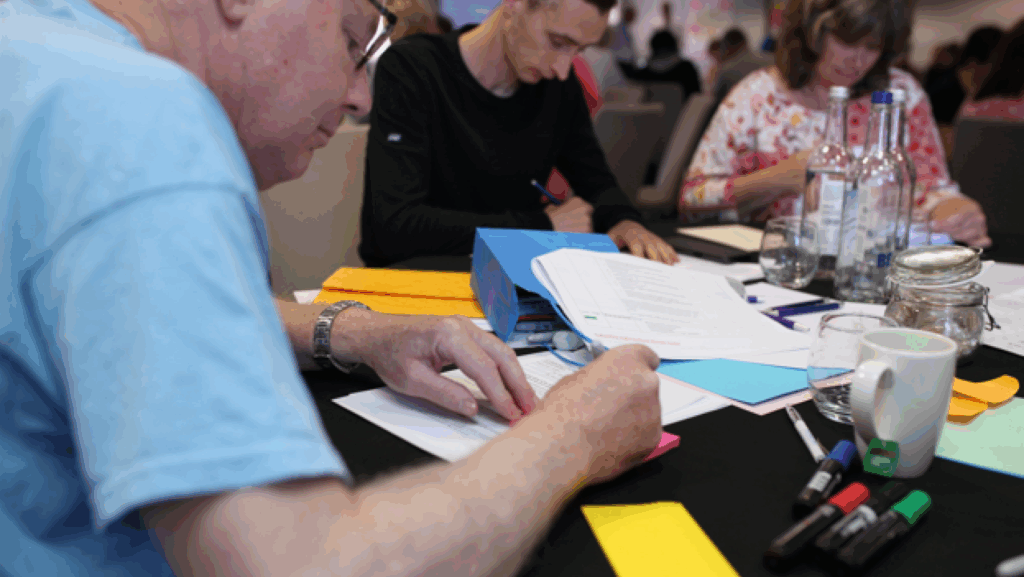
Group-based, low-reach method—online or offline—for exploring issues in depth, sharing new information, and supporting respectful dialogue to…

Online Survey
Individual, high-reach, online method using expert knowledge to explore issues, forecast developments, and build consensus through structured,…
Citizens’ Assembly
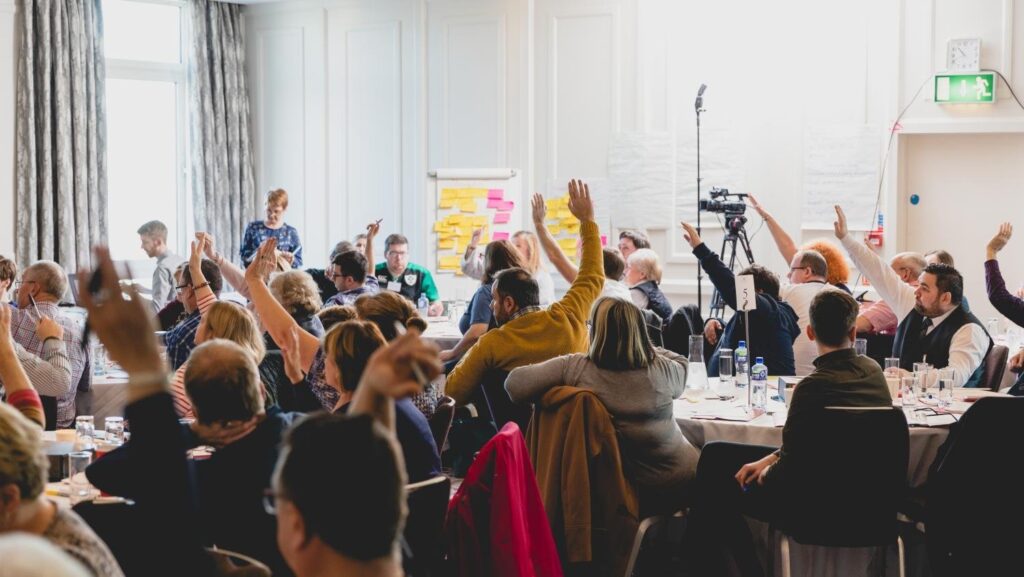
Group-based, medium-reach process—online or in-person—providing in-depth learning and deliberation using new information to explore issues and generate…

Citizens’ Jury
Group-based, low-reach process—online or in-person—using new information for in-depth exploration of an issue, allowing representative citizens to…

Pop-up Stand
Temporary, community-based spaces designed to engage the public, build civic skills, and make participation in local decision-making…

Participatory Budgeting
Group-based, high-reach process—online or in-person—where citizens engage deeply with new information to explore budget priorities, deliberate trade-offs,…

Co-Production
Group-based, low-reach approach—online or in-person—where service users and providers share new information, collaborate in-depth, and reach joint…

Citizens’ Visioning
Citizen visioning is a participatory process that brings together a representative group of local people to create…

Community Conversations
Community Conversations means working with local “conversation starters” to hold informal discussions within their own networks, broadening…