Case Study
How does a community lead the conversation towards a positive future?
Community Conversations

- Location: Derry City and Strabane District Council
Size: 17 participants attended the first session and 15 remained involved for the duration of the process.
Challenge: The Derry and Strabane Sustainability and Climate Commission recognised a gap in how local climate priorities were being shaped. Whilst there was active engagement from some communities, other voices were underrepresented in discussions. To develop a climate action plan rooted in real community priorities, the council needed to hear from people in all parts of the district – especially those in easier to ignore, economically underserved and rural and remote areas.
Recruitment : The council’s Community Development Team led recruitment by sharing the opportunity through established networks for community groups. This was supported by paid adverts on social media, including Reddit and Facebook, to reach a broader audience. As the process progressed, on-street recruitment was carried out in areas with lower initial uptake to ensure more geographically diverse participation
Key partners: Derry City and Strabane District Council, Involve, Ipsos, Quantum, Derry City and Strabane Sustainability Commission
Project timeline: February – May 2025
Days of dialogue: Two three hour evening sessions, two full Saturday workshops, and an additional full Saturday co-creation workshop. Alongside these sessions, each Conversation Starter held at least three hours of community conversations with their own networks.
Executive Summary
Objectives
The aims of the project were to:
- Understand what’s important to local people, what they like about where they live and what they want to protect as we prepare for the impacts of climate change
- Hear from a diversity of perspectives, especially from geographically and socially underrepresented communities
- Focus on community assets and strengths as a foundation for climate resilience
- Link community engagement to existing council initiatives and build long-term capacity for local climate conversations
- Building capabilities among members of the Sustainability and Climate Commission to work in partnership with communities and residents
Approach and Methodology
The council recruited 17 ‘Conversation Starters’ through a combination of community outreach, paid social media ads, and face-to-face on-street recruitment in underrepresented areas. Conversation Starters are ordinary residents from across the council area interested in talking to their family, neighbours, friends and co-workers about what’s important locally, so that climate action can reflect those priorities.
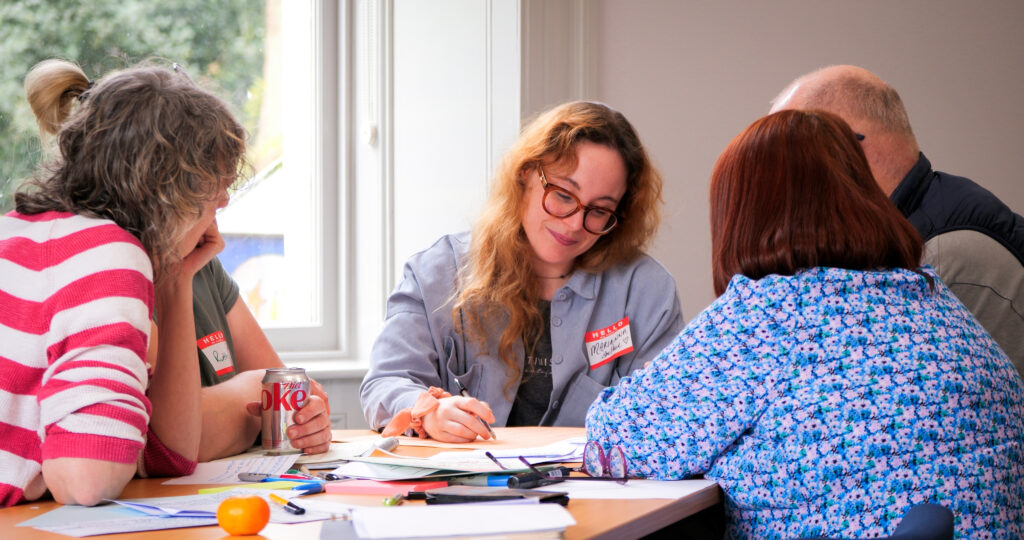
The Conversation Starters spent an evening and full Saturday at the start of the process co-designing a conversations handbook and upskilling on how to hold inclusive, productive conversations within their communities. The emphasis in these sessions was starting where communities are, rather than with a climate focus. They were encouraged to explore what matters most to them and their communities, allowing climate themes to emerge naturally. Conversation Starters then hosted conversations with their own networks of friends, family, neighbours, social clubs and workspaces.
They brought insights from these conversations back into the workshops. The Conversation Starters met for another evening and full day to share what had come up in their community conversations, identify shared themes, explore key insights and start thinking about a set of actionable ideas. These ideas were drafted from workshop notes by a member of the Involve team and shared via email with the group for feedback.
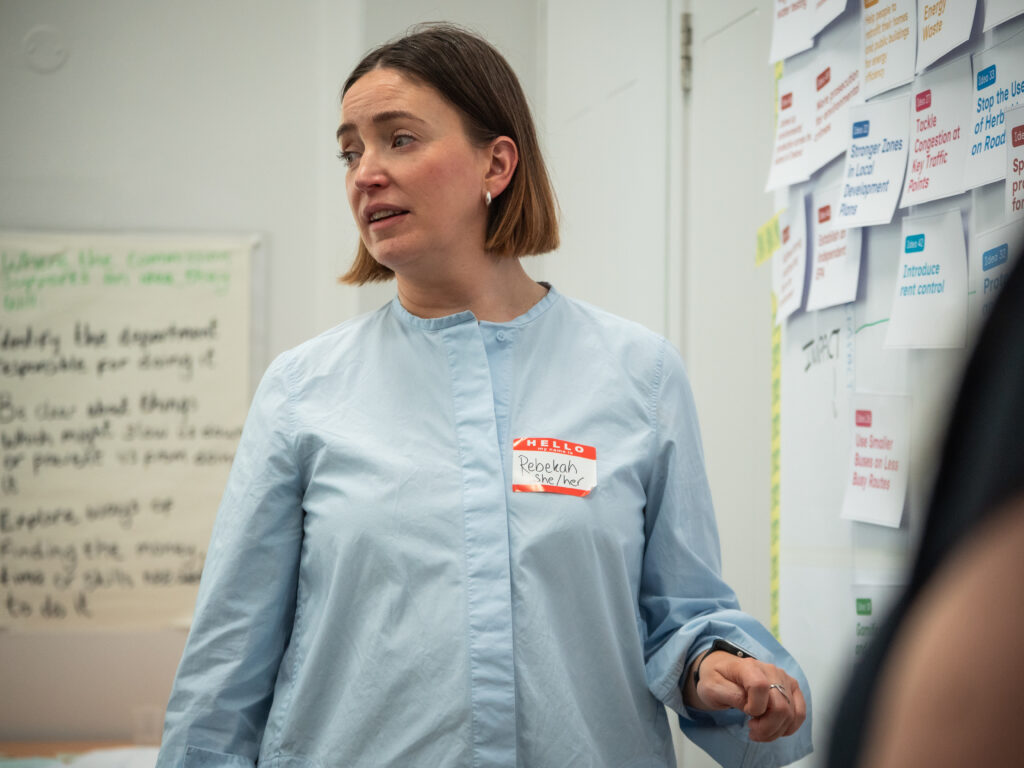
The Conversation Starters met for a final full day session with policymakers. Following an energising ‘speed dating’ session, Conversation Starters and Policy Makers reviewed and refined ideas collaboratively to build a set of ideas for action. They then prioritised these ideas along a matrix (impact x ease of implementation), which formed the final output from the engagement process.
Inclusive Practice
Efforts were made to ensure inclusion across age, gender, ethnicity, disability, housing tenure and climate perspectives. Particular attention was paid to ensure inclusion across geographies, so those in rural and remote areas were actively engaged. All steps were taken to make the sessions as inclusive as possible.
This included, paying everyone a gift of thanks for their time, covering caring costs, producing materials in accessible formats (e.g. using typefaces that support people with dyslexia), and designing activities that cater for a range of learning styles. All sessions were designed to be welcoming and empowering to everyone involved.
Innovations
Key Outcomes
- Of the 17 participants recruited, 15 participated in all sessions.
- Each participant hosted a minimum of three hours of community conversations, reaching a wide-cross section of the district.
- No demographic data was collected on community conversation participants.
Social Impact
- Participants reported feeling empowered and valued.
- One individual who was hesitant to speak at the start of the process described feeling ‘important’ by the end.
- The process built local confidence and increased appetite for ongoing climate engagement.
Policy Influence
- Residents’ ideas were shared with the Sustainability Commission.
- These proposals will shape the upcoming Climate Action Plan and the council are currently looking into funding opportunities to bring to life the initiatives developed by the group.
Internal Impact
- The project marked a shift in how the council views participation – recognising residents as co-creators of solutions not just people to consult.
- It laid the foundation for ongoing ‘community hubs’ for climate engagement across the district and the ideas for action are being fed directly into climate plans.
Challenges & Lessons Learned
Challenges
- Recruitment was difficult, particularly outside Derry City where existing civic networks are strong. Despite a wide call-out, most initial interest came from already engaged urban groups.
- Another challenge was the disparity in climate knowledge amongst Conversation Starters. Some had no existing knowledge whilst others were deeply engaged in climate advocacy and activism in their local areas.
- This led to imbalances in discussions during group sessions with the more active group dominating conversations. It proved difficult to fact-check or fully explore complex claims made by engaged Conversation Starters in real time during the sessions.
In-Project Solutions
- We addressed the recruitment challenges through paid social media adverts and targeted on-street recruitment in underrepresented areas
- We addressed the challenging group dynamics by framing discussions around shared values and themes that everyone could get behind, even if they didn’t have the same access to information.
Lessons Learned
- There is value in exploring areas of disagreement more deeply. Next time we would allow more time to ‘sit with the trouble’ and resist converging on ideas too quickly
Communicating for impact
A report is currently being finalised, which will feed directly into the council’s Climate Action Plan. The insights and recommendations are also being used to support fundraising for local projects, so future climate initiatives are shaped directly by communities.
The council are exploring establishing local engagement ‘hubs’ for ongoing climate engagement to continue the good work of the process.
Key Takeaways & Recommendations
Focus on community benefits first. Climate conversations rooted in what people care about work better than starting with climate jargon or technical goals.
Support everyday residents to become community climate champions. When people feel they’re contributing to their communities, they engage with real commitment.
Creating meaningful roles for residents. Residents bring their own expertise to the table, create roles for them that draws on this expertise, and make sure to communicate how their ideas are contributing to real change.
Partnership is key. When communities and policy-makers co-create solutions, the results are more impactful, actionable, and trusted.

Additional Resources & References
You can read the final report here.
Contact Information
Derry City & Strabane District Council
Climate Team
Tel: (+44) 71 25 3253
